
SPAIN…ON THE ROAD AGAIN
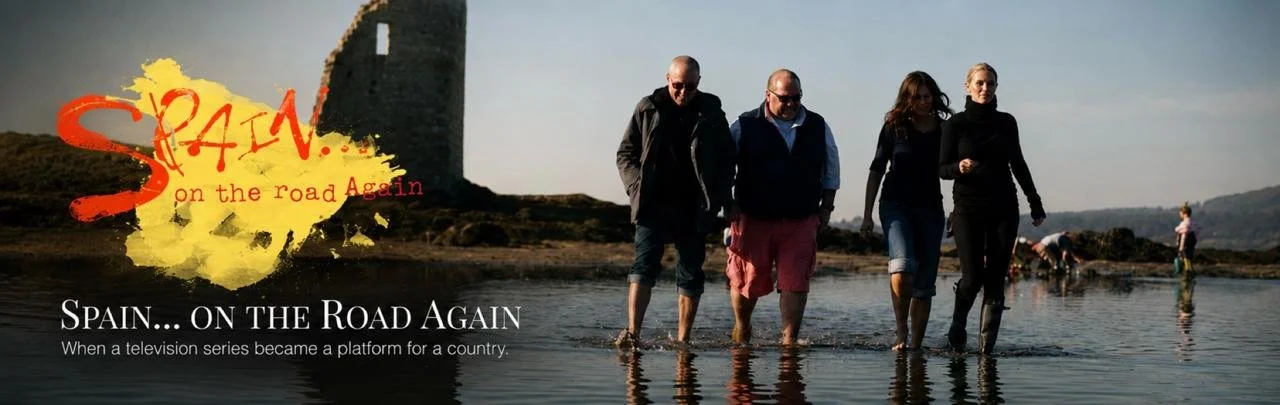
When a television series becomes a platform for a country.
Country Positioning · Entertainment · International Communications
In 2007, Spain was experiencing an extraordinary cultural moment.
Its gastronomy, architecture, creativity and way of life were attracting growing international attention.
Spain… on the Road Again was conceived to take that momentum into American mainstream culture through a 13-part television journey across the country.
The idea was unusually forward-looking for its time: rather than advertising Spain, embed the country itself inside the entertainment.
TACTICA became involved months before filming began, helping build the network of relationships, partnerships and communications that would allow the
project to take shape and travel internationally.
Original trailer for Spain… on the Road Again, the 13-part television series featuring Gwyneth Paltrow, Mario Batali, Mark Bittman and Claudia Bassols.
Building the platform before the cameras rolled
Long before the first episode was filmed, the project already had to work as both a television production and a commercial proposition.
TACTICA worked with Frappé Productions during pre-production to help connect the series with Spanish regions, institutions and brands whose participation could strengthen the project economically while giving them a place inside an international story about Spain.
For 2007, the model was unusually forward-looking. Rather than placing a conventional tourism message around the programme, Spain itself became part of the entertainment, with its food, landscapes, cities, architecture and culture embedded directly into the content.
That changed the value of participation. Partners were not simply buying visibility; they were associating themselves with a contemporary image of Spain designed for the U.S. market.
Original sponsor materials positioned the opportunity in exactly those terms, with TACTICA acting as the commercial contact around the project.
Before Spain could travel on screen, the platform around it had to be built.
From authority to mainstream culture
The original concept already had considerable credibility.
Mario Batali brought television recognition and popular food culture. Mark Bittman brought the authority of The New York Times and a strong connection with Spain’s culinary world. Claudia Bassols provided the Spanish perspective from inside the journey.
Then Gwyneth Paltrow joined the project.
An Academy Award winner for Shakespeare in Love, with a genuine personal relationship with Spain, her arrival changed the scale of the series. What had begun as a highly credible food and travel concept suddenly had the ability to enter mainstream American culture.
That broader cultural authority continued throughout the programme, with figures such as Ferran Adrià, Juan Mari Arzak, Frank Gehry, Carme Ruscalleda, Sergi Arola, René Barbier and Michael Stipe becoming part of the journey.
The music captured the same idea. Willie Nelson’s iconic On the Road Again was recorded for the series with Antonio Carmona, bringing an American classic into dialogue with flamenco.
Spain was not being advertised. It was being experienced.
One shot. Then go dark.
Before filming began, the project needed one concentrated moment of international attention.
On 2 October 2007, TACTICA orchestrated the major press presentation at Madrid’s Hotel Santo Mauro. The objective was not simply to announce the series, but to demonstrate the scale the project had already achieved, reinforce confidence around it and create momentum before production moved out of sight.
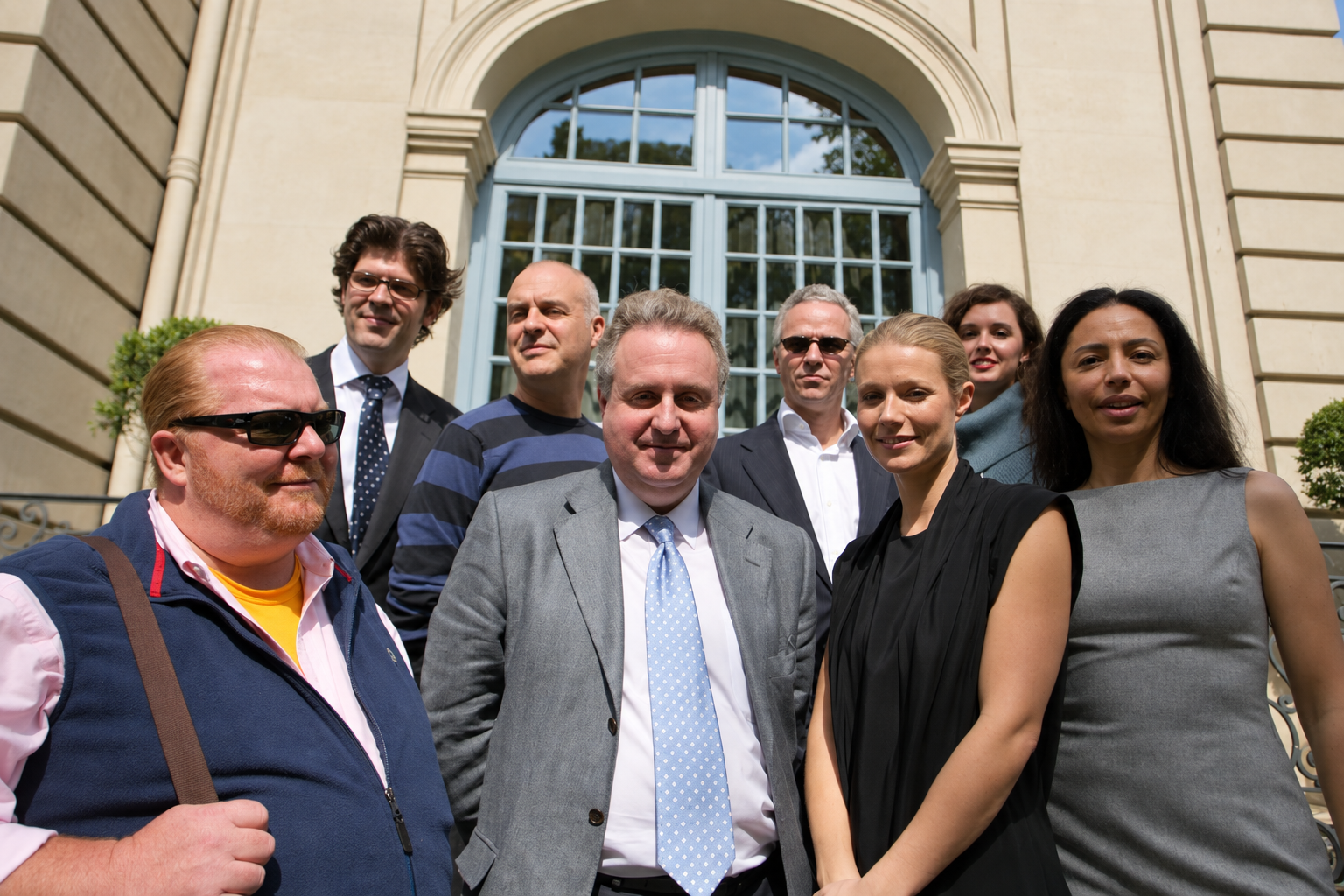
Hotel Santo Mauro, Madrid, 2 October 2007. Among those pictured: Mario Batali, Mark Bittman, Gwyneth Paltrow, Claudia Bassols, Natasha De Santis and Claudio Navarro at the press presentation of Spain… on the Road Again.
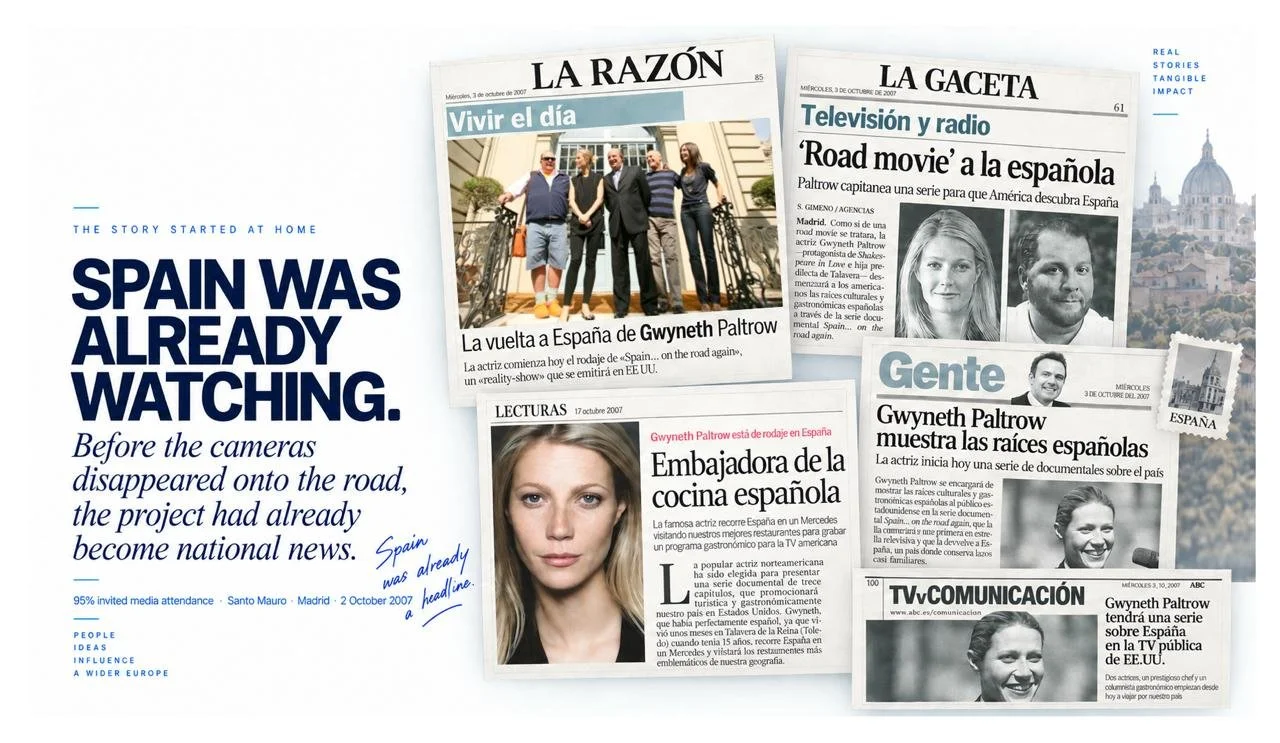
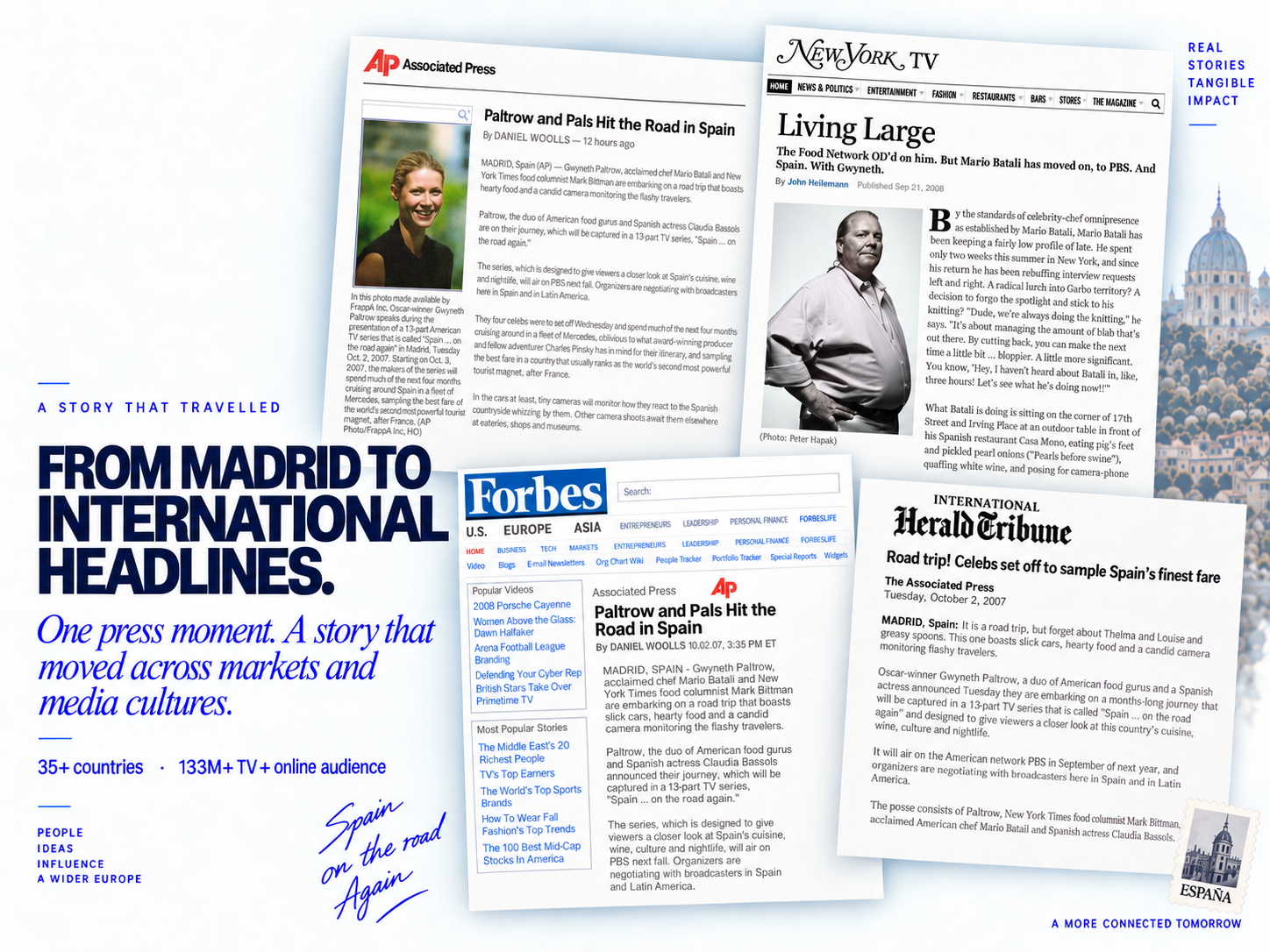
TACTICA’s contemporary report captured the strategy in one line:
…generate the news in one shot and then “go dark” during filming.
The event brought together Spanish media, foreign correspondents and major international news agencies. 95% of invited media attended, and the story travelled quickly across Europe, the United States, Latin America and other international markets.
The result was more than coverage. It generated new interest around the project, the cast and the opportunities still surrounding the production.
Once filming began, the challenge changed completely. Visibility had to give way to discretion so the cast could move through Spain, locations could remain protected and the production could preserve the spontaneity audiences would eventually see on screen.
First, create the momentum. Then protect the story.
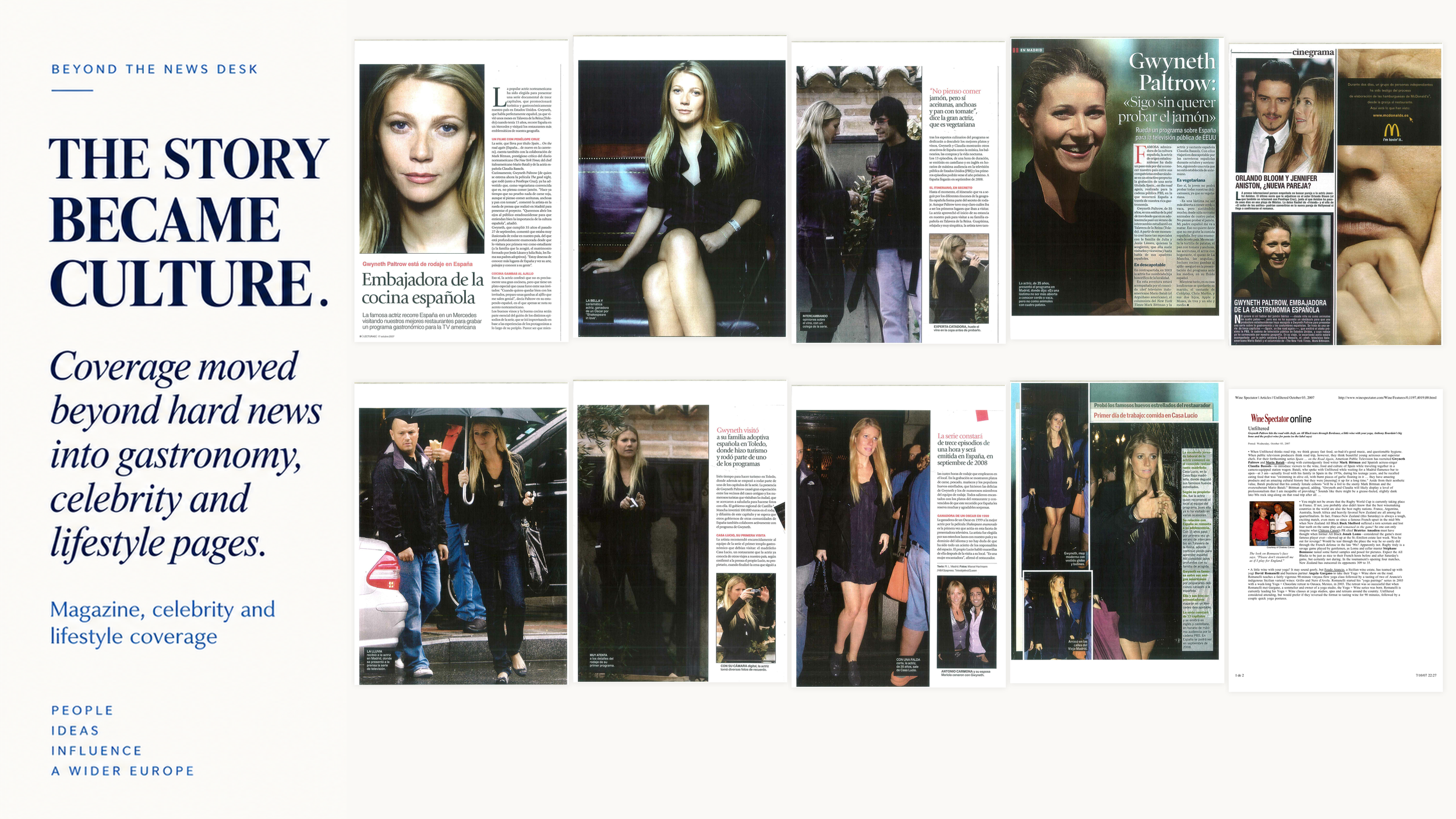
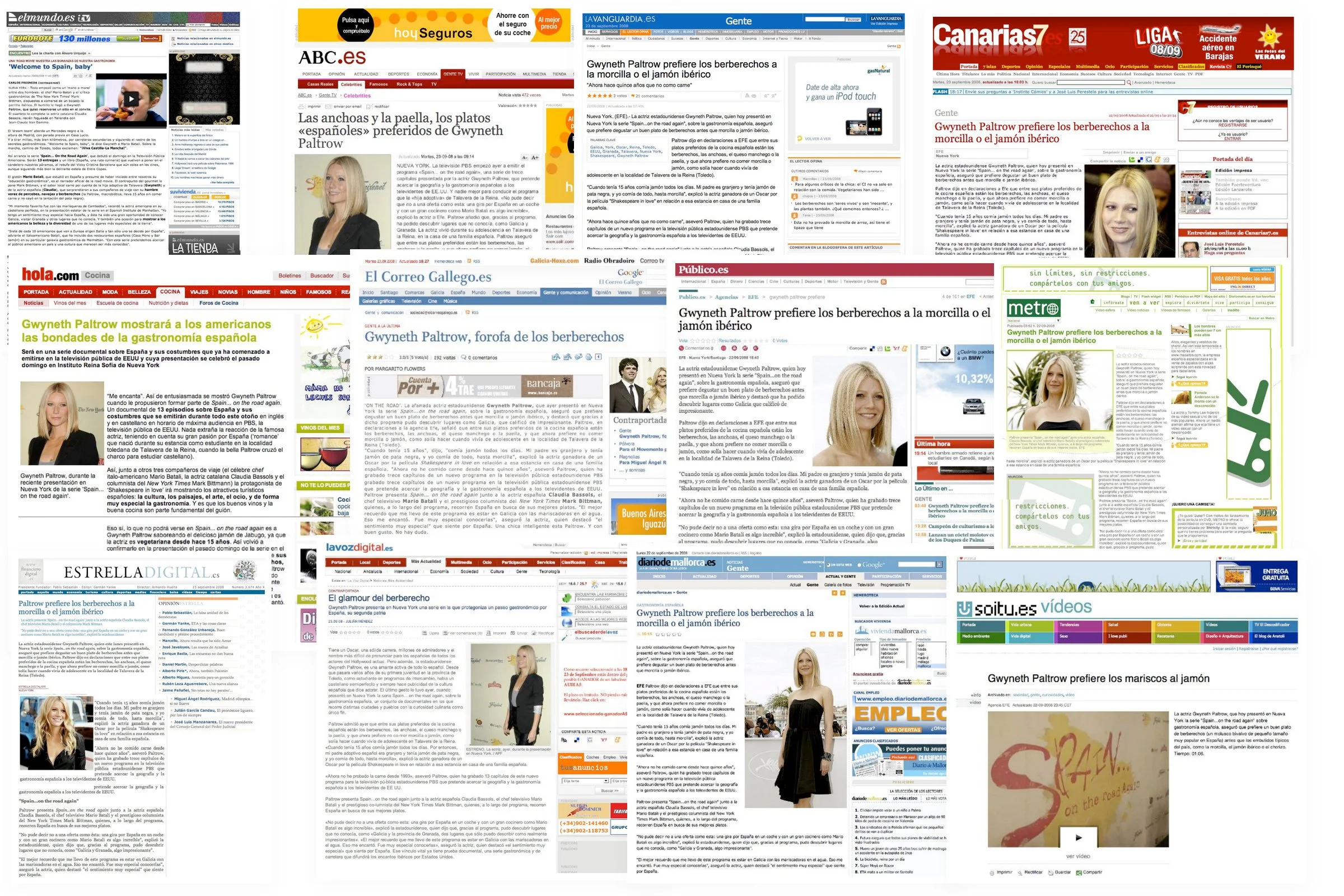
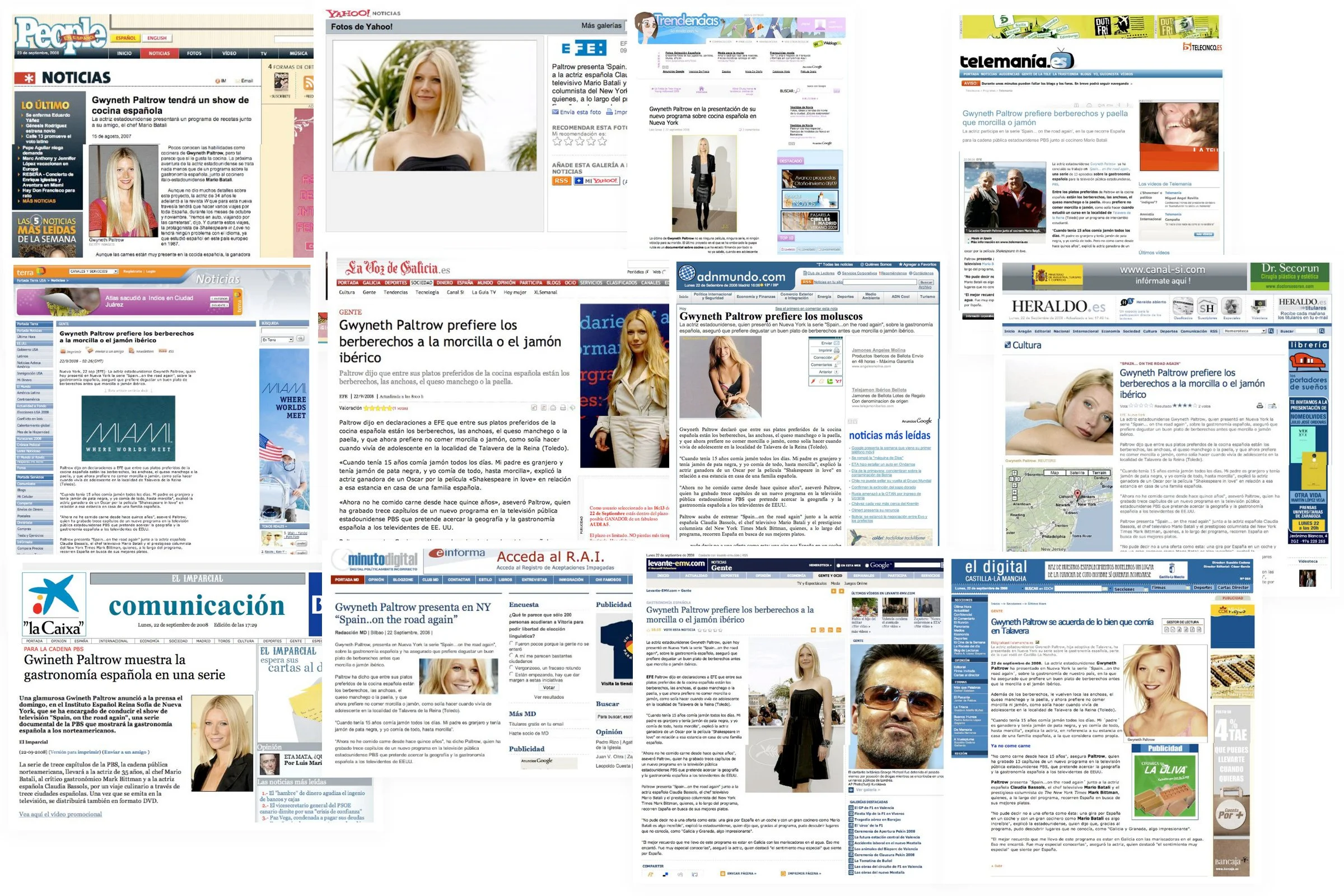
From television into American culture
By the time Spain… on the Road Again premiered in 2008, the project had moved well beyond the boundaries of food and travel television.
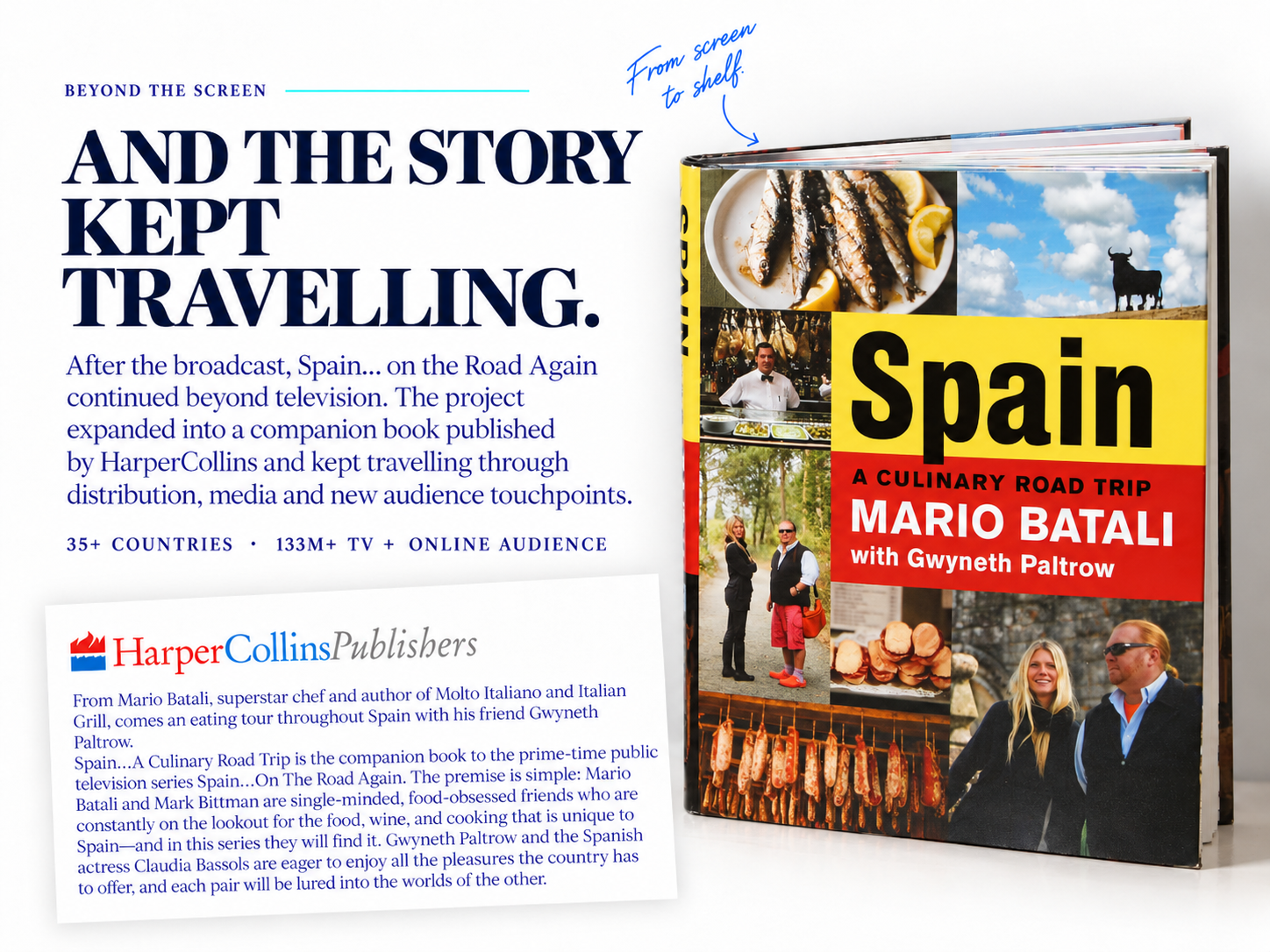
The series aired nationally across U.S. public television, while its reach expanded through press, digital distribution and an accompanying book. Official launch materials presented it explicitly as more than a food or travel show, positioning Spain as a country still waiting to be discovered by many Americans.
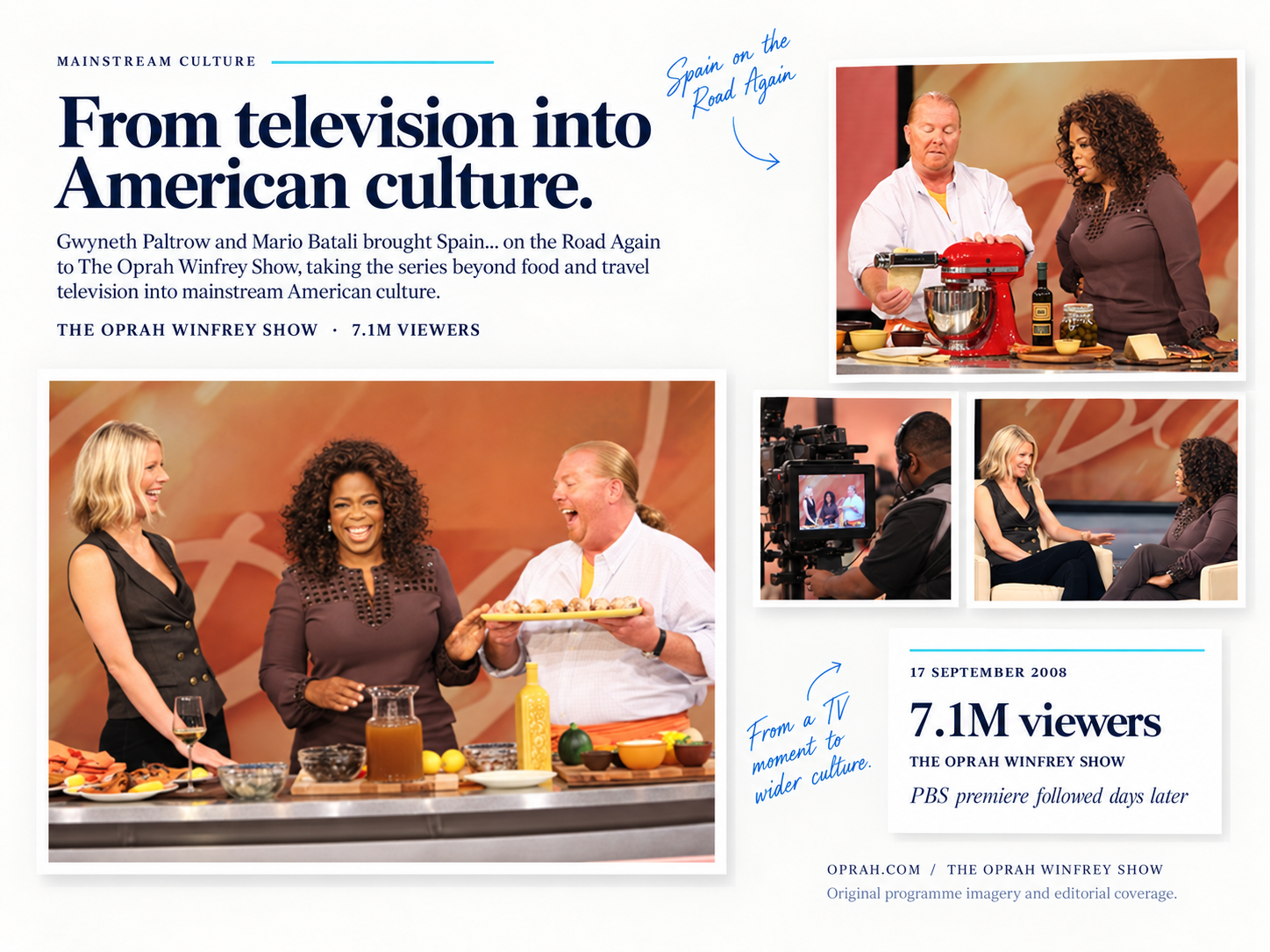
Days before the premiere, Gwyneth Paltrow and Mario Batali appeared on The Oprah Winfrey Show, presenting both the journey and the companion book to one of the most influential mainstream television audiences in America at the time. TACTICA’s later case documentation records 7.1 million viewers for that appearance.
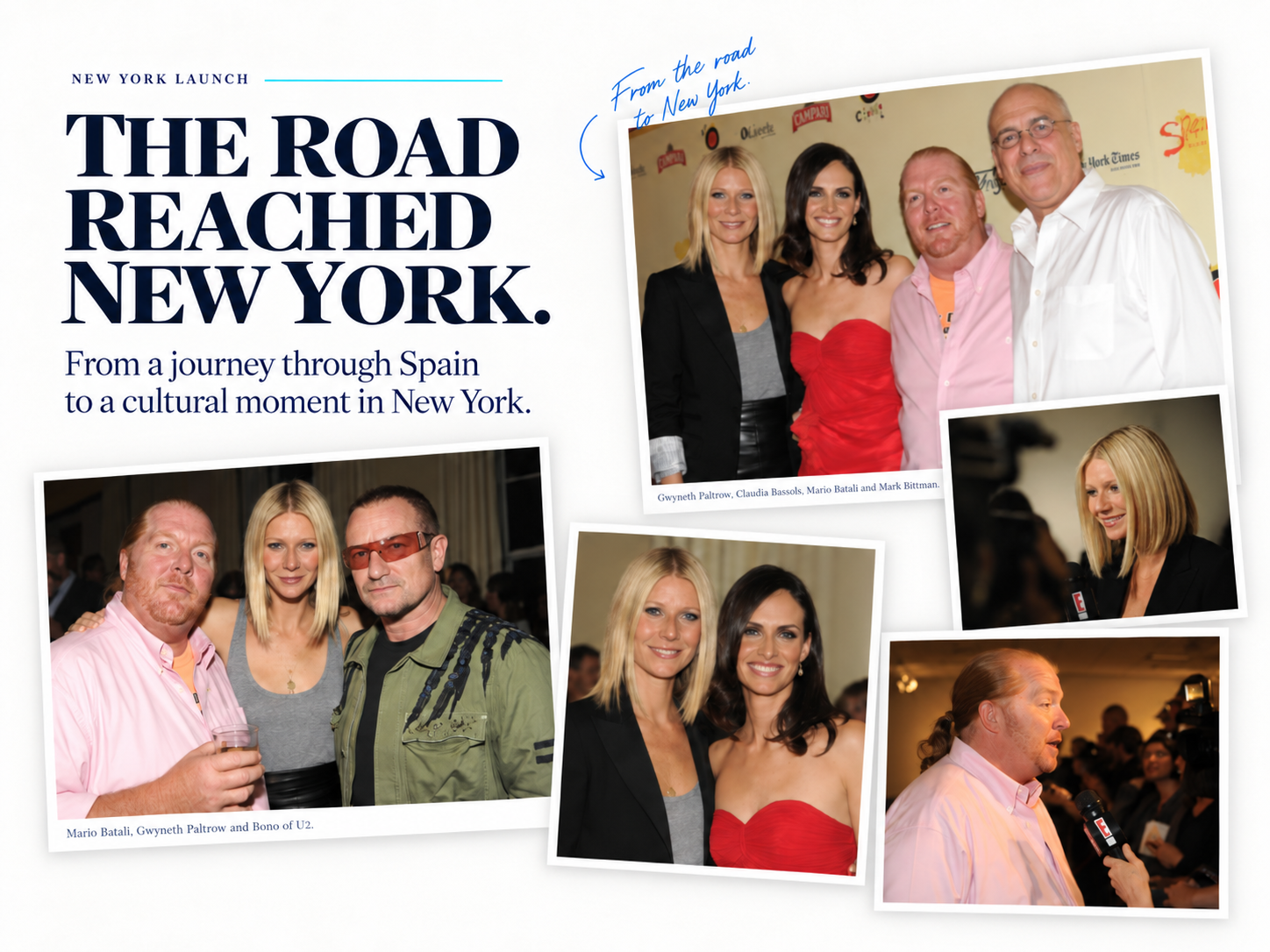
In New York, the project was celebrated at the Queen Sofía Spanish Institute, bringing the cast together with figures from the city’s cultural and entertainment world, including Bono, Helena Christensen, Jill Hennessy and Blythe Danner.
The media footprint extended across national press, culture, food, entertainment and society titles.
What had started as a television project about Spain had entered American mainstream culture.
What this proves
Spain… on the Road Again shows TACTICA operating where positioning, business development, relationships, communications and execution converge.
The work began before the cameras rolled, helping build the ecosystem that could make the project possible. It continued through international communications, production, launch and amplification as the programme moved from an ambitious idea into a global media property.
What made the project distinctive was not simply its reach, but the way that reach was created: by connecting entertainment, cultural credibility, institutional support, commercial opportunity and media relevance around a single idea.