
TÜRKİYE
A DIFFERENT PLACE IN THE FASHION SYSTEM.
Türkiye already had industrial scale, manufacturing know-how and a growing generation of designers and brands.
But international opportunity existed at different levels.
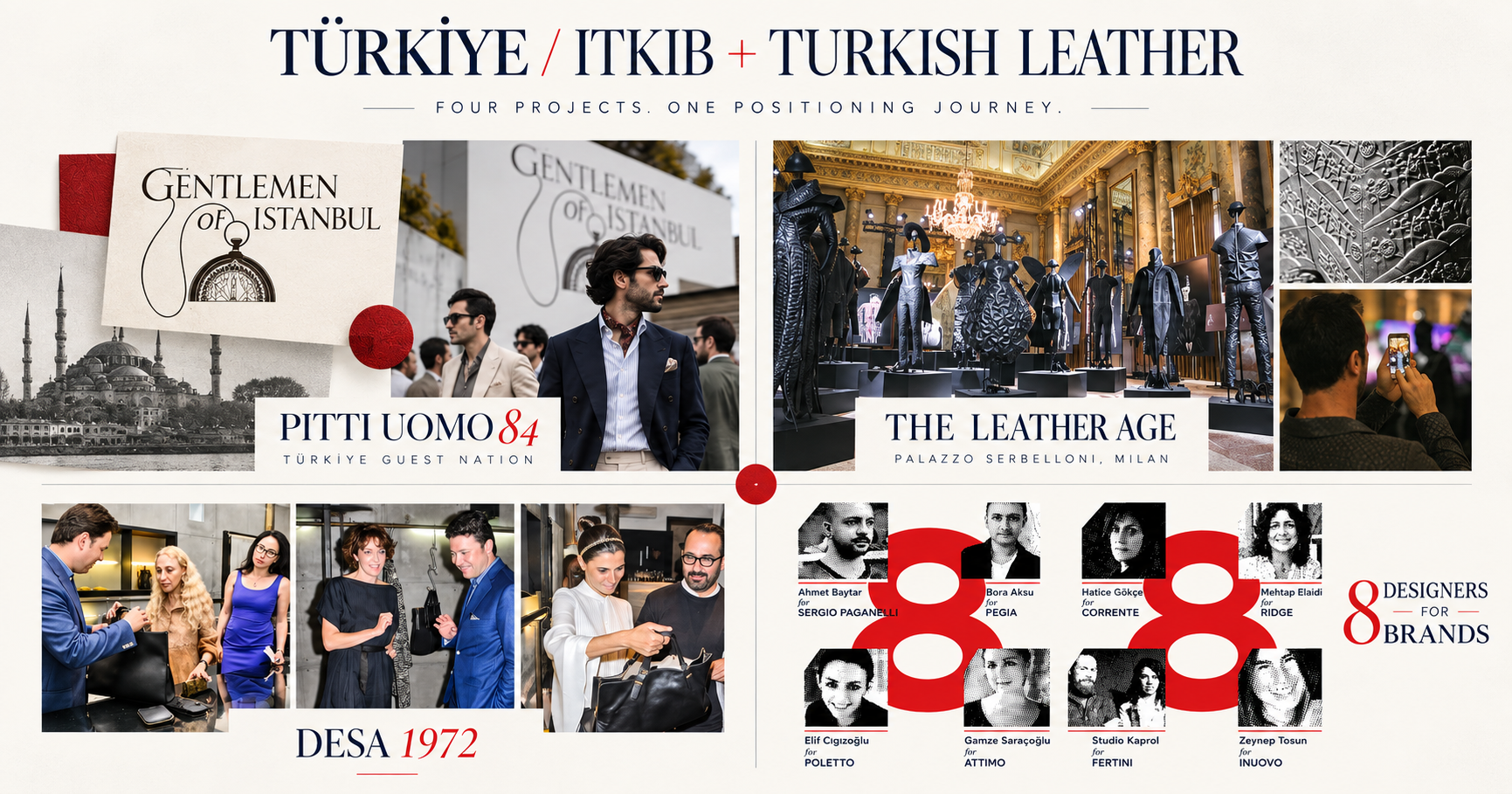
For apparel manufacturers, the immediate challenge was access: meeting buyers, brands and companies in international markets.
For Türkiye’s wider fashion ecosystem, the question was different: how to gain greater recognition, relevance and influence inside the institutions and platforms that shaped the industry itself.
And within leather, another challenge was emerging: how to turn manufacturing strength into greater value through design, innovation, culture and brands.
Over several years, TACTICA worked across all three.
Different challenges required different answers.
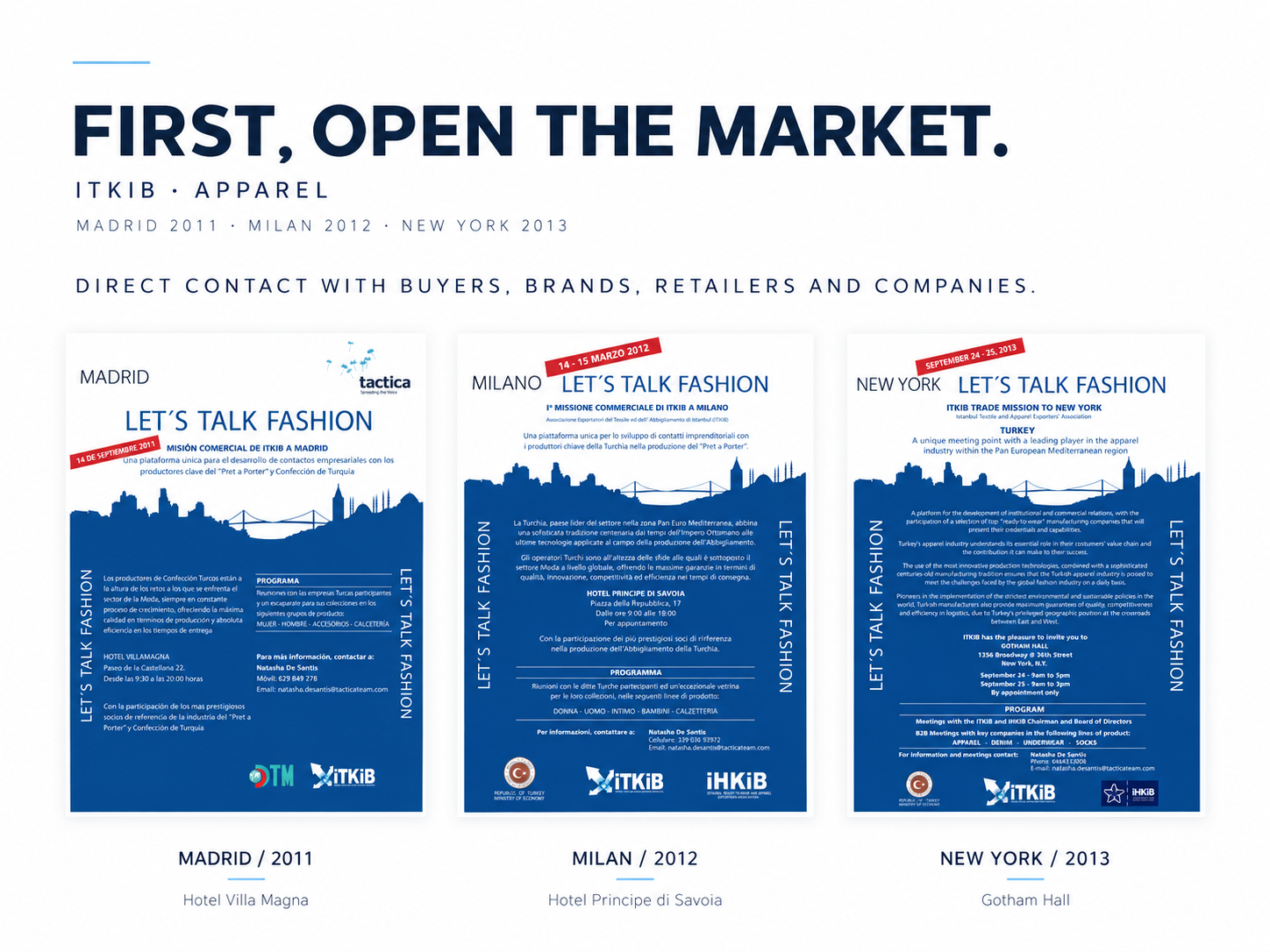
FIRST, OPEN THE MARKET.
ITKIB · APPAREL
MADRID 2011 · MILAN 2012 · NEW YORK 2013
The first objective was practical.
Connect Turkish apparel manufacturers directly with the international companies that could buy from them, work with them or become long-term partners.
TACTICA worked with ITKIB to create those connections in Madrid, Milan and New York, bringing manufacturers face to face with buyers, brands, retailers, companies and industry decision-makers.
The programmes combined targeted outreach, meetings, relationship building and local execution.
They were not simply showcases for Turkish production.
THEY WERE WORKING PLATFORMS FOR BUSINESS.
Market by market, relationship by relationship, Turkish manufacturers gained direct access to the people on the other side of the table.
ACCESS WAS ONE THING.
POSITION WAS ANOTHER.
The work in Italy exposed a second challenge.
Turkish companies could manufacture for the international fashion industry and do business within it.
But that did not automatically mean that Türkiye itself was being understood as a source of design, creative culture and fashion relevance.
That required a different kind of engagement.
TACTICA began working with the institutions, people and platforms that shaped the fashion system itself.
The objective was no longer simply to create commercial meetings.
It was to change the level at which Türkiye could participate.
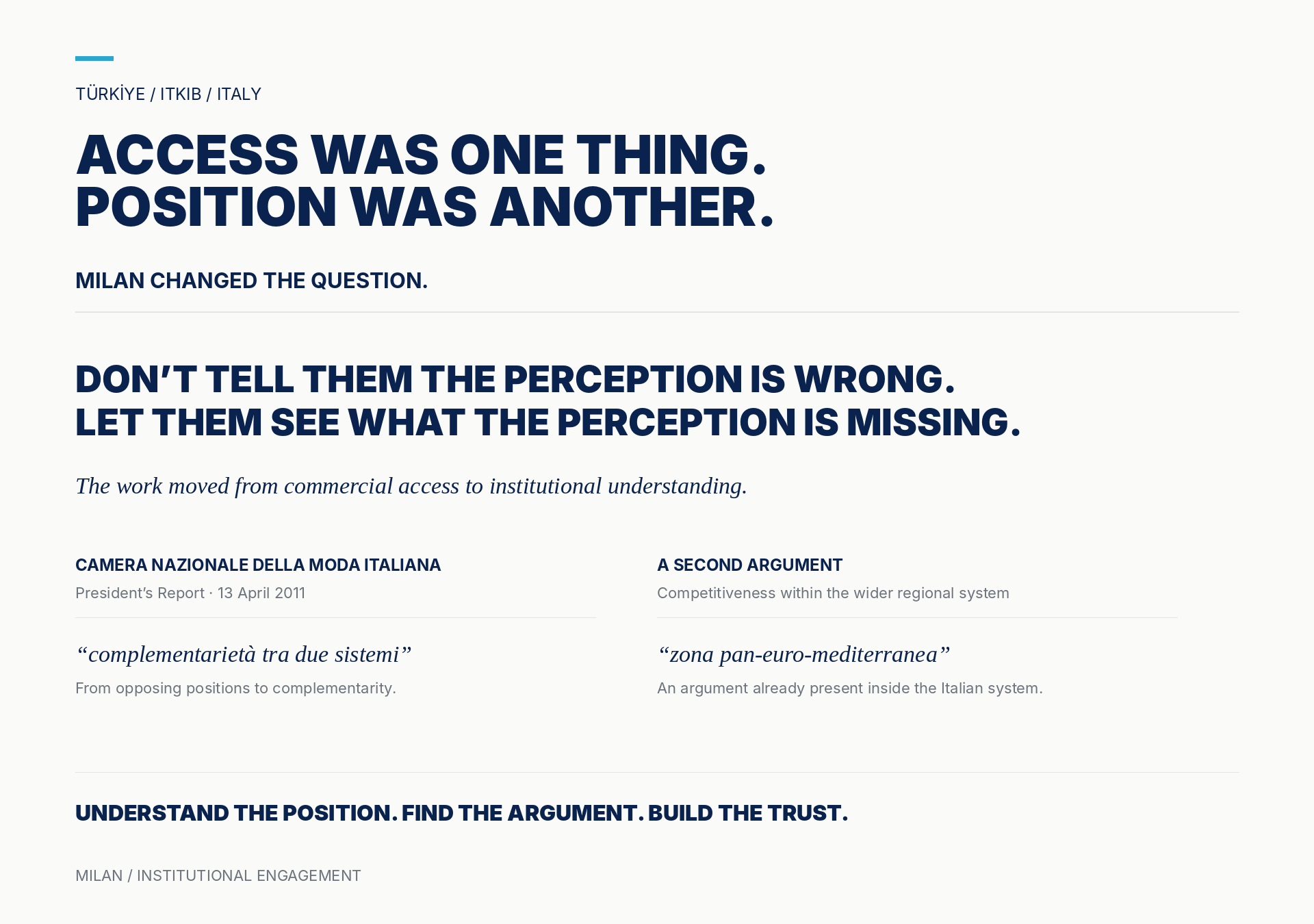
MILAN CHANGED THE QUESTION.
Institutional relationships became increasingly important.
TACTICA worked to build trust with the Italian fashion system by understanding its priorities, its language and its own view of the industry.
Rather than simply asking institutions to see Türkiye differently, the work was to find the argument that allowed their existing view to evolve.
DON’T TELL THEM THE PERCEPTION IS WRONG.
LET THEM SEE WHAT THE PERCEPTION IS MISSING.
Commercial access was becoming something broader:
institutional understanding, trust and recognition.
LEATHER FACED A DIFFERENT QUESTION.
Türkiye’s leather industry already possessed manufacturing depth, technical capability and centuries of material know-how.
The challenge was not simply access to market.
It was how to create greater value from that strength.
Design. Innovation. Craftsmanship. Creative capability. Brands.
The move from Turkish Leather to Turkish Leather Brands made the ambition increasingly explicit.
And it opened another strand of work between Türkiye and the international fashion system.
FROM INSPIRED TO INSPIRING.
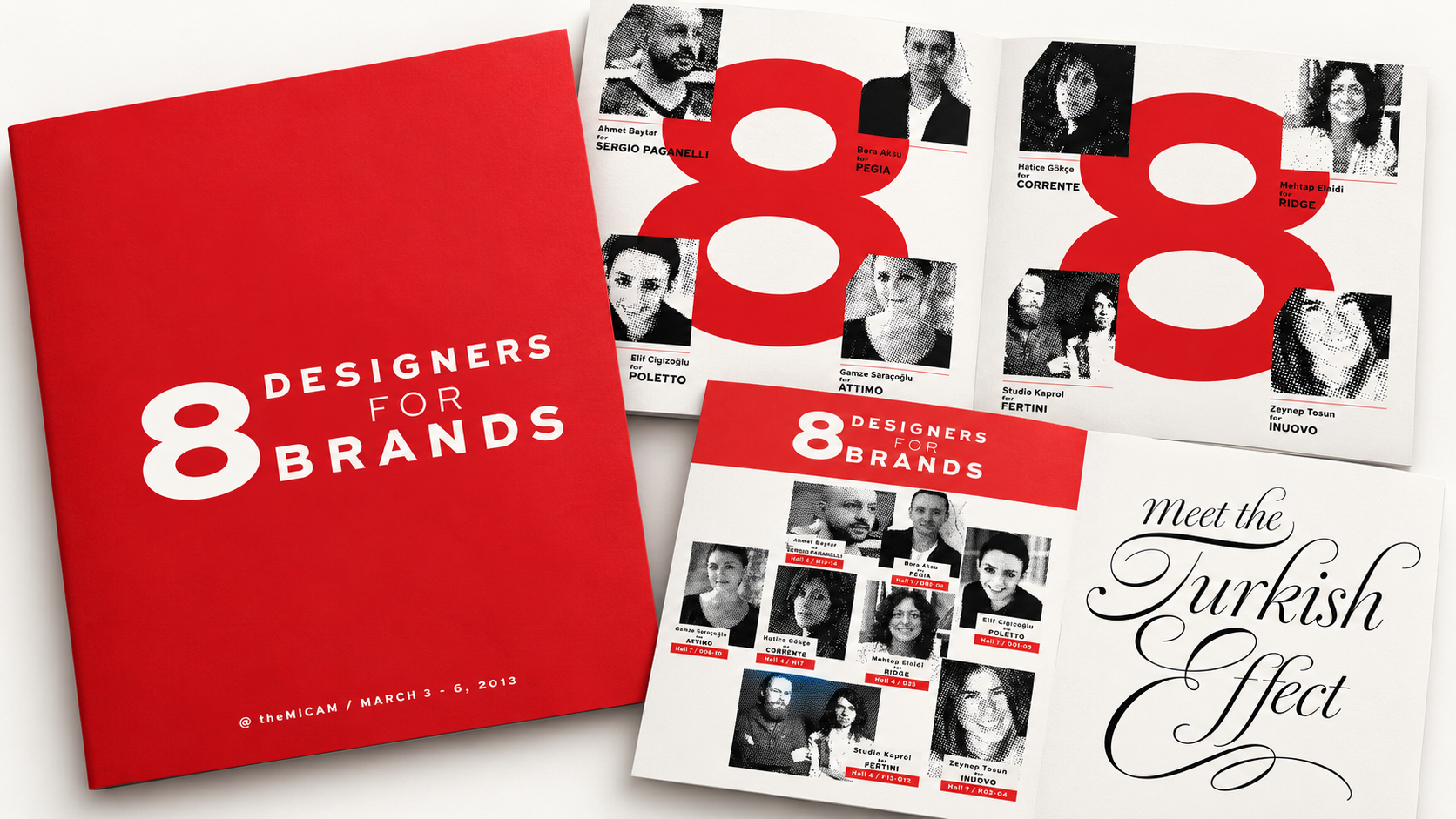
8 DESIGNERS FOR 8 BRANDS
MICAM · MILAN · 2013
At MICAM, Milan’s international footwear trade fair, eight Turkish designers were paired with eight Turkish footwear companies to create original collections together.
The ambition went beyond promotion.
The project was designed to demonstrate Türkiye’s ability to create and produce original design, while encouraging manufacturers and designers to work together.
It also addressed a larger business challenge: helping companies move beyond contract manufacturing towards brands capable of developing and selling collections of their own.
The objective was explicit:
TO MOVE FROM INSPIRED TO INSPIRING.
EXPLORE 8 DESIGNERS FOR 8 BRANDS →
THE AMBITION MOVED UP A LEVEL.
PITTI UOMO 84 · FLORENCE · 2013
THE RECOGNITION WAS VISIBLE. THE WORK BEHIND IT WASN’T.
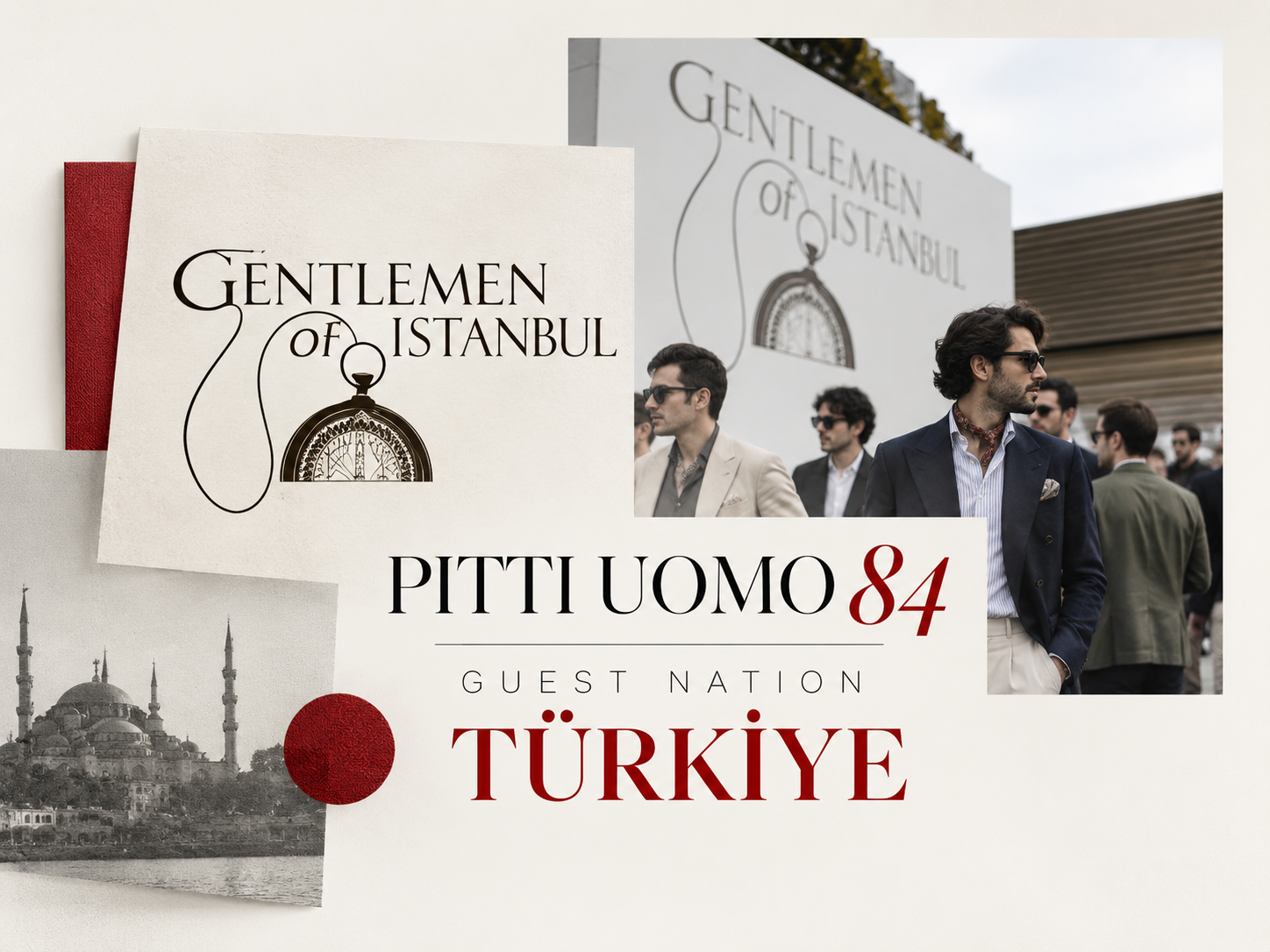
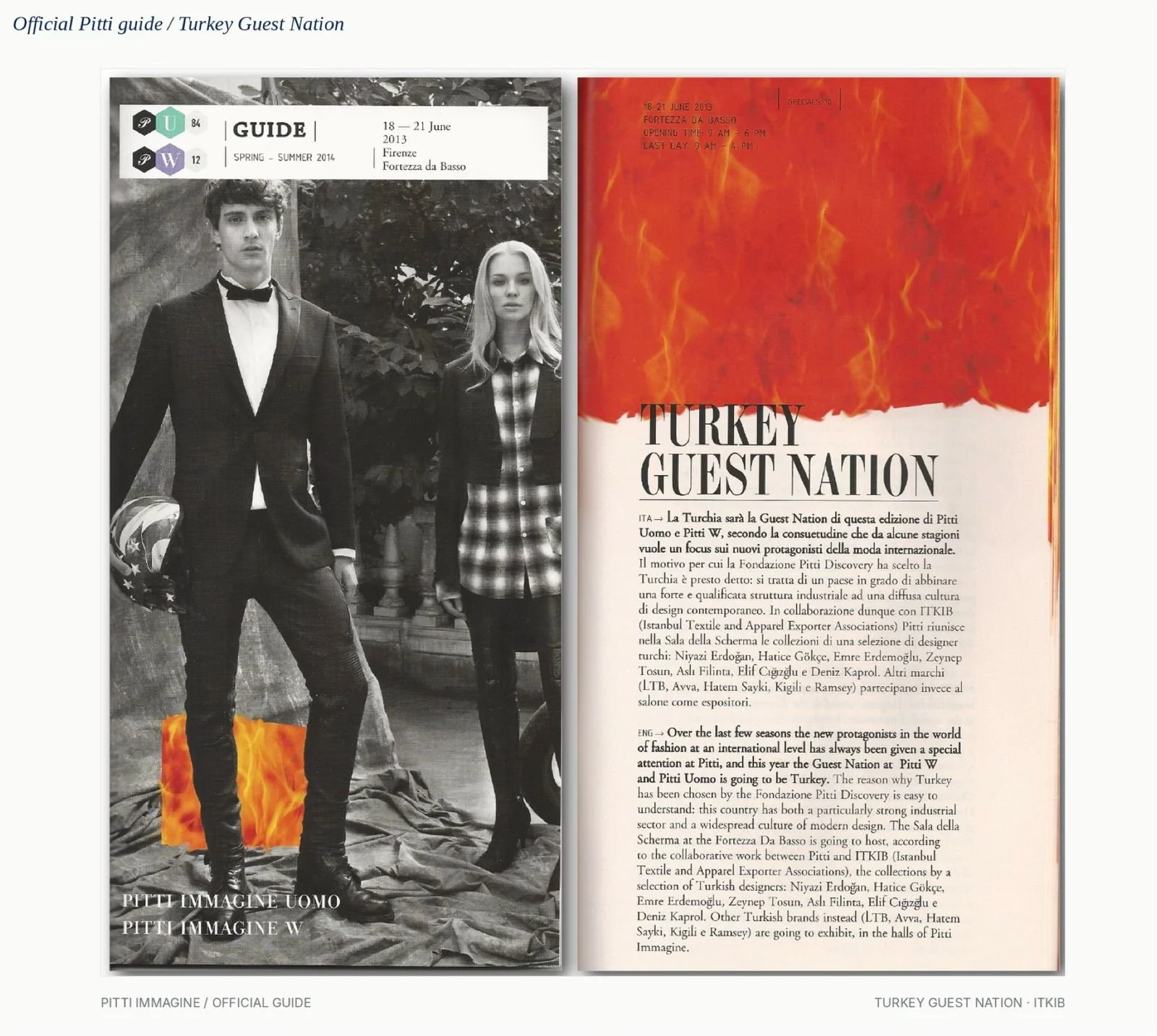
Three months after MICAM, the ambition moved from demonstrating creative capability through individual collaborations to positioning Türkiye on a country-level international fashion platform.
At Pitti Uomo 84, Türkiye became Guest Nation.
Türkiye was no longer appearing only as a place that produced fashion for others. It was being presented as part of the fashion conversation itself.
BUILDING VALUE MEANT SHARING KNOWLEDGE.
TURKISH LEATHER SUMMIT
The same ambition also required exchange.
Turkish and Italian industry leaders, institutions, designers and specialists came together around the questions that increasingly mattered to the sector:
design, innovation, craftsmanship, branding and higher added value.
The relationship was not simply about taking Turkish companies into Italy.
It also meant bringing knowledge, experience and people from the Italian fashion and leather system into Türkiye.
The exchange worked in both directions.
INDUSTRY NEEDED A CULTURAL LANGUAGE.
THE LEATHER AGE
Hatice Gökçe had created something extraordinary.
TACTICA recognised that The Leather Age could do more than demonstrate what could be made with Turkish leather.
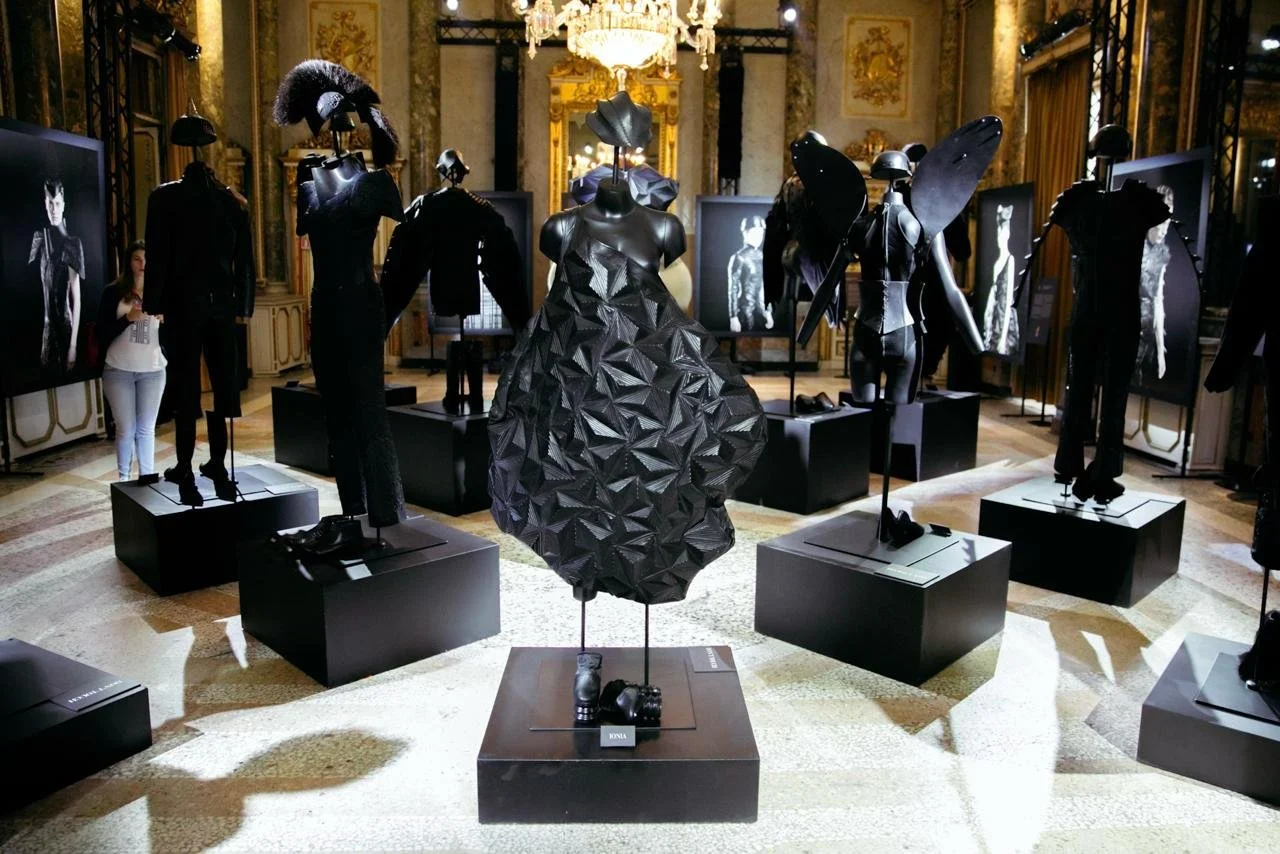
IN THE RIGHT CONTEXT, IT COULD CHANGE HOW THAT CAPABILITY WAS UNDERSTOOD.
Created by Hatice Gökçe and promoted by the Turkish Leather Council, the exhibition connected Anatolian history with craftsmanship, material knowledge and contemporary design.
TACTICA helped take the project from Istanbul into the official context of Milano Moda Donna, under the patronage of Camera Nazionale della Moda Italiana and inside the Fashion Week calendar.
At Palazzo Serbelloni, sixteen costumes and twelve accessories transformed centuries of leather know-how into a contemporary cultural proposition.
The material was leather.
THE OPPORTUNITY WAS PERCEPTION.
FROM MANUFACTURING AUTHORITY TO BRAND LEGITIMACY.
DESA NINETEENSEVENTYTWO
At company level, the same search for greater value took another form.
DESA already had manufacturing credibility, technical capability and product.
The challenge was to be read internationally as something more:
A FASHION BRAND.
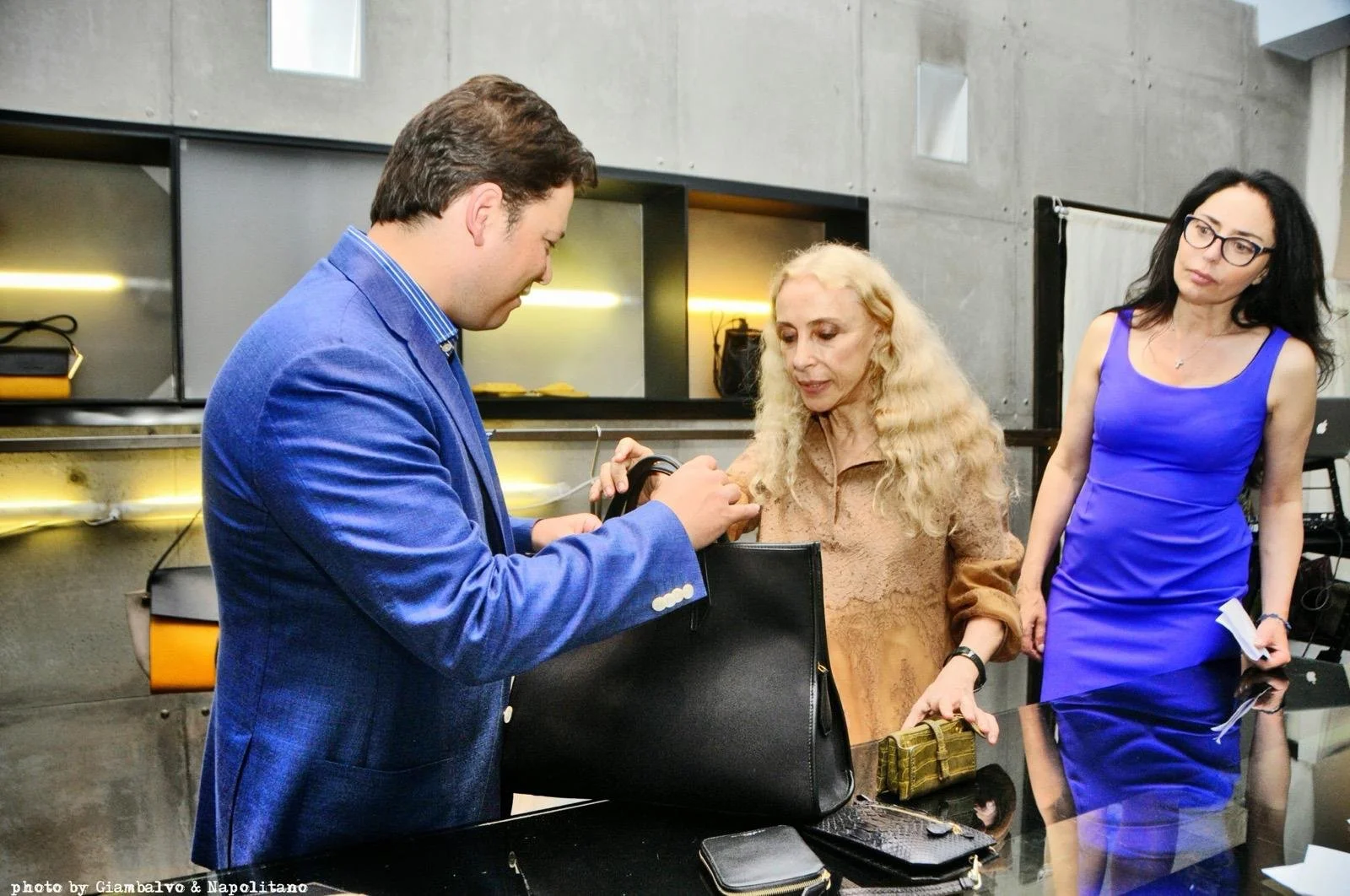
TACTICA worked across positioning, institutional relationships, international editors, buyers, Milan Fashion Week and sustained market visibility to help build that legitimacy over time.
The objective was not simply more coverage.
It was to create the conditions in which DESA could increasingly be judged alongside fashion brands rather than only through its manufacturing capability.
PRODUCTION AUTHORITY WAS BECOMING FASHION RELEVANCE.
EXPLORE DESA NINETEENSEVENTYTWO →
THE WORK WAS CONNECTED.
THE CHALLENGES WERE NOT THE SAME.
Apparel needed market access.
The wider fashion ecosystem needed institutional recognition and a stronger position inside the system.
Leather needed to turn industrial strength into greater value through design, innovation, culture and brands.
TACTICA worked differently across each of those challenges, while allowing the experience, knowledge and relationships developed in one part of the system to strengthen what became possible in another.
THE INDIVIDUAL PROJECTS MATTERED.
WHAT MATTERED MORE WAS WHAT THEY MADE POSSIBLE TOGETHER.
A DIFFERENT PLACE IN THE FASHION SYSTEM.
Across its work with ITKIB, Turkish Leather and individual companies, TACTICA helped connect Türkiye’s existing industrial capability with international markets, institutions, creative talent, cultural platforms and the relationships required to unlock new opportunities.
Not one campaign.
Not one formula.
A series of different interventions around a much larger ambition: expanding the ways Türkiye could participate in the international fashion system.
EXPLORE THE CASES
8 DESIGNERS FOR 8 BRANDS →
PITTI GUEST NATION →
THE LEATHER AGE →
DESA NINETEENSEVENTYTWO →